



 |
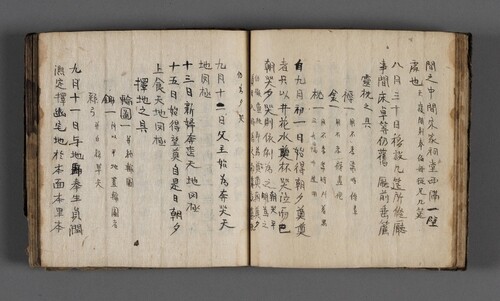
| ▲ This photo of "Manggeukrok," a book on funerals and ancestral rites written in late Joseon period, is provided by the National Folk Museum of Korea. (PHOTO NOT FOR SALE) (Yonhap) |
SEOUL,
Jan. 14 (Yonhap) --
Ahead of April 28, 1794, Ahn Gi-myeong (1775–1841) weighed heavily on his heart. It was nearing the yeonsang rite — a memorial service held one year after a death — for his mother, Lady Park of Juksan. Calling himself a “deeply guilty and grievously unfilial son,” Ahn did not hide his sorrow.
As he observed the three-year mourning period for his mother, Ahn compiled all that he experienced — the funeral procedures, as well as the names of those who paid condolences in person or by letter — into a book titled "Manggeukrok." Meaning “a record of boundless grief,” the volume documents the funeral and mourning rites of a single household.
The National Folk Museum of Korea said Wednesday it has published a research volume titled "Diaries of Funeral and Ancestral Rites," which organizes eight diary materials related to funerals and ancestral rites, including "Manggeukrok."
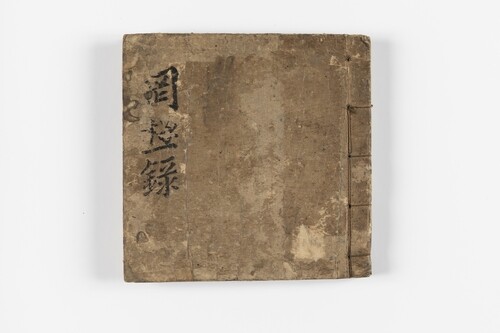 |
| ▲ This cover of "Manggeukrok," a book on funerals and ancestral rites written in late Joseon period, is provided by the National Folk Museum of Korea. (PHOTO NOT FOR SALE) (Yonhap) |
The Chungcheong Cultural Research Institute at Chungnam National University transcribed and translated the diaries, which were written in the late Joseon period during the 18th and 19th centuries, converting cursive script into standard characters.
Each diary provides detailed accounts of funeral procedures — from chohon, the calling of the soul of the deceased, to the end of mourning — as well as the operation of ancestral rites and the relocation of graves. They also record expenses and items used for funerals and rites, along with the mobilization of labor and the division of roles.
A museum official said the records vividly show that funerals at the time were not merely private or family affairs, but social processes borne collectively by families, clans and local communities.
"Manggeukrok" offers a glimpse into the funeral rites of a military official’s family in the late 18th century. Written between June 1793 and September 1795, the diary originally recorded funeral procedures and condolence lists separately, but the two were later combined during the copying process.
Ahn candidly documented mistakes he made while trying to follow ritual propriety. For example, regarding hoenghyo — the cords or cloth used to bind the body — he confessed that he “followed only a single passage without considering that the width of cloth differed between past and present.”
He also lamented that due to the family’s circumstances, they could not use ceremonial garments such as wonsam, dangui and daedae, writing that it left him in “boundless despair,” and noting that some items were substituted with alternatives.
Other materials, including "Chojongnok" and "Seokhyeon Jangsi Ilgi," which were written during the funeral of Yun Heung-gyu (1797–1840) of the Papyeong Yun clan, also provide valuable insight into funeral practices of the period.
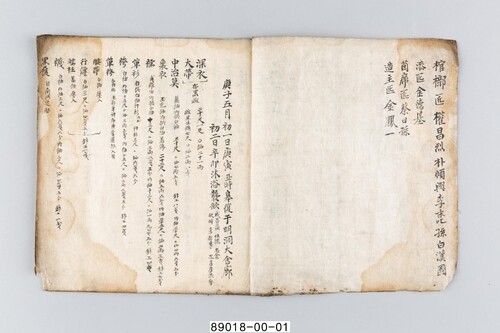 |
| ▲ This photo of "Chojongnok," a book on funerals and ancestral rites written in late Joseon period, is provided by the National Folk Museum of Korea. (PHOTO NOT FOR SALE) (Yonhap) |
In particular, the records detail the process of transporting a body from Seoul, where the deceased died in the mid-19th century, to his hometown for burial, along with related costs, supplies and manpower, giving them added significance.
In the publication’s foreword, museum director Jang Sang-hoon said the eight diaries included in the volume are “precious documentary sources that form the foundation for the study of traditional life culture in the late Joseon period, and of funeral and ancestral rites in particular.”
The materials are available on the museum’s website.
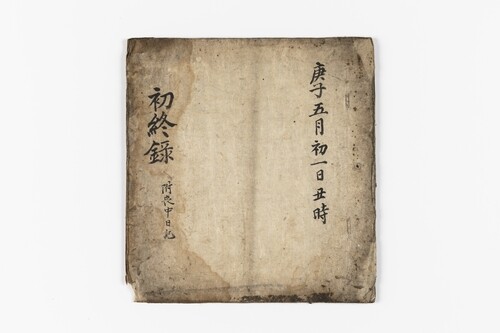 |
| ▲ This cover of "Chojongnok," a book on funerals and ancestral rites written in late Joseon period, is provided by the National Folk Museum of Korea. (PHOTO NOT FOR SALE) (Yonhap) |
(C) Yonhap News Agency. All Rights Reserved


