athlete-China
 |
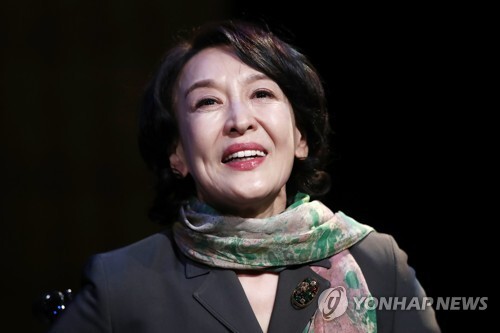
| ▲ In this file photo from Nov, 27, 2020, South Korean short track speed skater Lim Hyo-jun leaves the Seoul Central District Court after having his sexual harassment conviction overturned in an appeal. (Yonhap) |
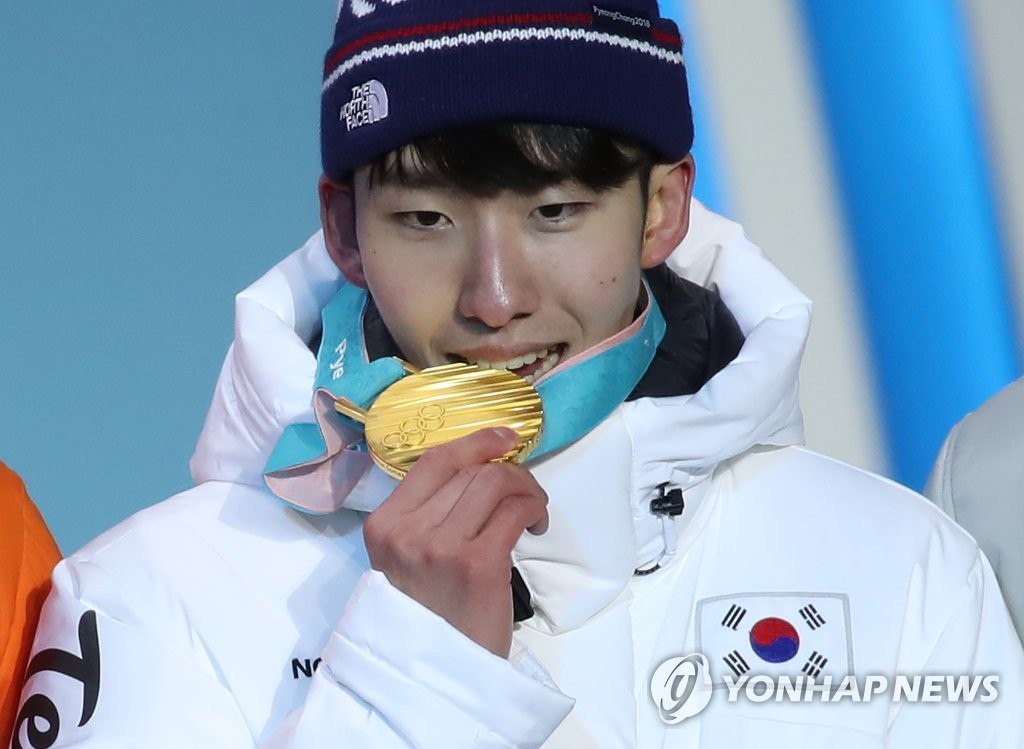 |
| ▲ In this file photo from Feb. 11, 2018, South Korean short track speed skater Lim Hyo-jun bites his gold medal from the men's 1,500 meters at the PyeongChang Winter Olympics during a ceremony at PyeongChang Medal Plaza in PyeongChang, 180 kilometers east of Seoul. (Yonhap) |
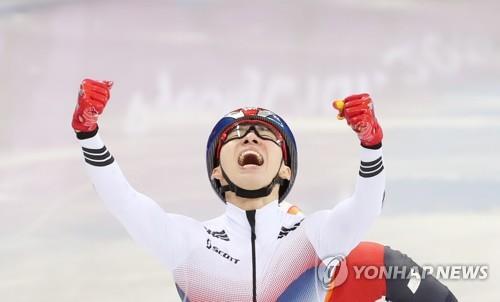 |
| ▲ In this file photo from Feb. 10, 2018, Lim Hyo-jun of South Korea celebrates after winning gold in the men's 1,500 m short track speed skating race at the PyeongChang Winter Olympics at Gangneung Ice Arena in Gangneung, 230 kilometers east of Seoul. (Yonhap) |
athlete-China
S. Korean-born short tracker acquired Chinese nationality last year: immigration records
SEOUL, March 17 (Yonhap) -- South Korean-born short track speed skater Lim Hyo-jun, whose pursuit of Chinese nationality was first revealed earlier this month, already switched allegiance last year, records showed Wednesday.
According to information released by the Korea Immigration Service, Lim acquired his Chinese passport on June 3, 2020.
The agency for the 2018 Olympic gold medalist said on March 6 that Lim was undergoing a special naturalization process in hopes of competing at the 2022 Beijing Winter Olympics for the host country. Lim had been going through a protracted legal battle over sexual harassment charges from 2019 and, according to the agency, Lim decided he wouldn't be able to skate at the Olympics next year unless he did so for another country.
Lim was charged in late 2019 after pulling down the pants of a male teammate and exposing a body part, with female skaters present, during practice. The Korea Skating Union banned Lim for one year, and the case reached court.
Lim was initially ordered to pay a 3 million won (US$2,660) fine in May 2020, but the appellate court found him not guilty six months later. The case is pending a final decision by the Supreme Court.
Based on the immigration records, Lim became naturalized as Chinese about a month after the court fine was issued.
Sources said Lim started getting calls from China to switch allegiance soon after the sexual harassment allegations surfaced. However, Lim is unlikely to be able to skate at the Olympics because of a clause in the Olympic Charter, published by the International Olympic Committee (IOC).
Under the Olympic Charter, athletes who acquire a new nationality may only participate in the Olympics for their new country after at least three years have passed since they last represented their former nation.
Lim's last international event for South Korea came in March 2019 at the world championships. The Beijing Olympics will run from Feb. 4 to 20 next year, meaning Lim will not be eligible.
The Olympic Charter allows for one exception -- an agreement among the relevant national Olympic bodies and the international federation may have that three-year period reduced or canceled.
The Korean Sport & Olympic Committee (KSOC), the Chinese Olympic Committee and the International Skating Union must reach a deal to allow Lim to compete at Beijing 2022. The KSOC is not expected to agree to that, considering Lim would then be skating for South Korea's rival in short track.
Sources also said Lim is now affiliated with the local skating federation for Hubei Province, rather than the Chinese Skating Association. Lim will double as a skater and a coach in Hubei, sources added.
Lim won the gold medal in the men's 1,500m at the PyeongChang Winter Olympics three years ago. He added a bronze medal in the 500m.
(END)
(C) Yonhap News Agency. All Rights Reserved










![[가요소식] 솔비, 13년째 보육원 찾아 봉사활동](https://korean-vibe.com/news/data/20251223/yna1065624915963288_822_thum.jpg)