

 |
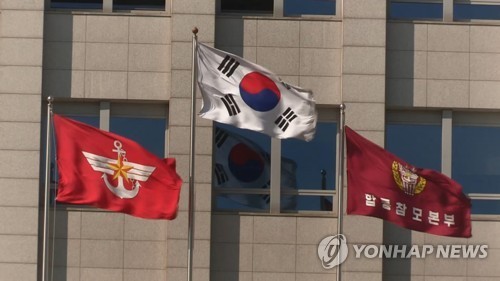
| ▲ This undated photo, provided by Yonhap News TV, shows flags flying at the defense ministry compound. (PHOTO NOT FOR SALE) (Yonhap) |
military-reform
Military advised to establish joint operations command to prepare for wartime control transfer
By Lee Minji
SEOUL, Jan. 20 (Yonhap) -- A special advisory committee tasked with reforming the military has called for establishing a joint operations command as South Korea pushes for a handover of wartime operational control (OPCON) from Washington, the defense ministry said Tuesday.
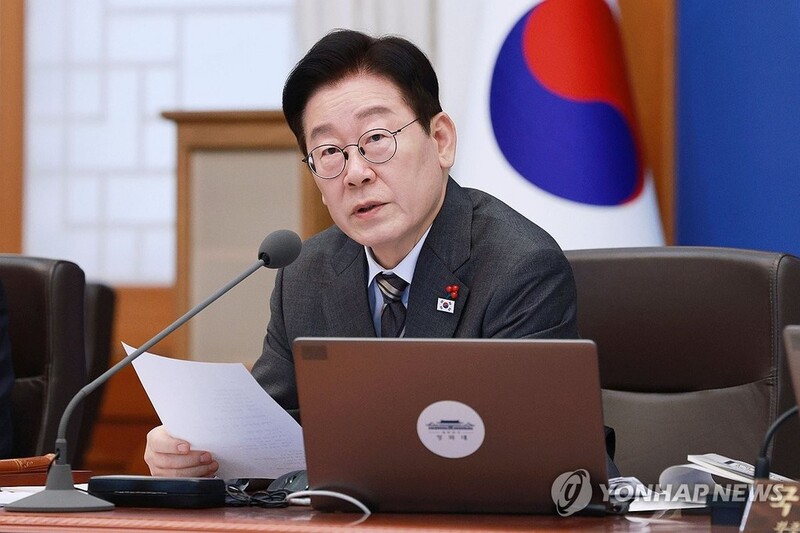
The recommendation by the committee, comprising civilian, government and military officials, comes as South Korea seeks to achieve the conditions-based OPCON handover from Washington within President Lee Jae Myung's five-year term ending in 2030.
"(The committee) suggested establishing a joint operations command for unifying the command structure and enhancing the completion of wartime and peacetime operational command," the ministry said in a release.
The committee also called on the Joint Chiefs of Staff to transfer its operational function to the envisioned command and focus on establishing military strategy and building military power, it added.
As part of the structural reform, the military was also advised to redefine the role and mission of the Strategic Command to ensure its strategic autonomy and underscored the need for launching a space command to respond to changes in the space security landscape and future warfare trends.
The Drone Operations Command was advised to be scrapped in consideration of overlapping features with respective functions within military branches, according to the ministry.
Addressing deterrence against North Korean threats, the committee called for the early deployment of key assets, such as high-power, high-precision anti-ballistic missiles and a long-range surface-to-air missile (L-SAM) interception system, as well as military satellites.
The committee also called for an annual average of a 10 percent hike in the defense research and development budget for cutting-edge technologies, such as artificial intelligence, defense semiconductors and robotics, according to the ministry.
(END)
(C) Yonhap News Agency. All Rights Reserved